
Dr Rebecca Mouncey
BVetMed PhD PGCert FHEA MRCVS
Equine Postdoctoral Fellowship
Department: Pathobiology & Population Sciences
Campus: Hawkshead
Research Groups: Animal Welfare Science and Ethics, Musculoskeletal Biology, Comparative Genomics, Endocrinology and Reproduction
Research Centres: Veterinary Epidemiology, Economics and Public Health
Rebecca is a veterinary surgeon and post-doctoral research fellow. Her current research, funded by the Horserace Betting Levy Board, the Racing Foundation and the Thoroughbred Breeders’ Association, focuses on broodmare reproductive health and breeding economics, congenital musculoskeletal disorders, early-life determinants of health and performance, and training-related injury risk.
Rebecca graduated as a veterinary surgeon from the RVC in 2003. She worked for 15 years in clinical practice in various roles, predominantly involved in Thoroughbred racing and breeding in the UK and Middle East. During which time she worked as a treating veterinarian at Lingfield Park Racecourse and the Olympic and Paralympic games in London, and was head of veterinary services at the Rashid Equestrian and Horseracing Club in Bahrain. In 2018 she returned to the RVC, to undertake a PhD investigating the epidemiology of disease and injury in Thoroughbred foals and yearlings, which she was awarded in July 2022. Rebecca was then awarded a fellowship funded by the Horserace Betting Levy Board to continue and expand this research, focusing on the developmental origins of health and performance in Thoroughbreds and economics of breeding. Her current research, funded by the Horserace Betting Levy Board, Racing Foundation and Thoroughbred Breeders Association, investigates endometrial health and the use of reproductive therapeutics in broodmares, the epidemiology and genetics of congenital musculoskeletal disorders in neonates, and how training workload influences musculoskeletal injury risk in both flat and national hunt racehorses. Rebecca is also a member of the Royal College of Veterinary Surgeons Ethics Review Panel and provides consultancy to the Thoroughbred Breeders Association.
Link to Google Scholar account: https://scholar.google.com/citations?user=_RBubfoAAAAJ&hl=en
Mouncey R, de Mestre AM, Verheyen KV. (2025) Born to run? Racing and training outcomes, population dynamics and traceability of a Thoroughbred birth cohort. Vet Rec. https://doi.org/10.1002/vetr.5777
Mouncey R, Arango-Sabogal JC, de Mestre AM, Verheyen KL. (2025) Born to run? Associations between gestational and early-life exposures and later-life performance outcomes in Thoroughbreds. Equine Vet J. https://doi.org/10.1111/evj.70084
Fehin W, Scott CJ, Arango-Sabogal JC, de Mestre AM, Mouncey R. (2025) Associations between endometrial swab bacteriology and cytology findings and live foal rates in Thoroughbred broodmares in the United Kingdom. Equine Vet J. https://doi.org/10.1111/evj.70086
Mouncey RR, Alarcon P, Verheyen KL. (2024) Determinants of Thoroughbred yearling sales price in the UK. Vet Rec Open. e81. https://doi.org/10.1002/vro2.81
Mouncey R, Arango-Sabogal JC, Rathbone P, Scott CJ, de Mestre AM. (2024) Prevalence of Microbial Isolates Cultured from Endometrial Swab Samples Collected from United Kingdom Thoroughbred Mares from 2014 to 2020. Veterinary Sciences 11(2):82. https://doi.org/doi:10.3390/vetsci11020082
Lawson J M, Salem SE, Miller D, Kahler A, van den Boer WJ, Shilton CA, Sever T, Mouncey RR, Ward J, Hampshire DJ, Foote AK, Bryan JS, Juras R, Pynn OD, Davis BW, Bellone RR, Raudsepp T, de Mestre AM (2024). Naturally occurring horse model of miscarriage reveals temporal relationship between chromosomal aberration type and point of lethality. Proceedings of the National Academy of Sciences 121(33): e2405636121. https://doi.org/10.1073/pnas.2405636121
Mouncey R, Arango-Sabogal JC, de Mestre AM, Verheyen KL. (2023) Associations between turn out practices and rates of musculoskeletal disease and injury in Thoroughbred foals and yearlings on stud farms in the United Kingdom. Equine Veterinary Journal. https://doi.org/10.1111/evj.14038
Mouncey R, Arango-Sabogal JC, de Mestre AM, Verheyen KL. (2023) Gestation length is associated with early-life limb deformities in Thoroughbred foals. Journal of Equine Veterinary Science 129:104896. https://doi.org/10.1016/j.jevs.2023.104896
Mouncey R, Arango-Sabogal JC, de Mestre AM, Verheyen KL. (2023) Incidence of disease, injury and death in Thoroughbred foals and yearlings on stud farms in the UK and Ireland. Veterinary Record 192(12)e2994. https://doi.org/10.1002/vetr.2994
Mouncey R, Arango-Sabogal JC, de Mestre AM, Verheyen KL. (2022) Descriptive study of medication usage and occurrence of disease and injury during gestation in Thoroughbred broodmares. Journal of Equine Veterinary Science 118:104104. https://doi.org/10.1016/j.jevs.2022.104104
Mouncey R, Arango-Sabogal JC, de Mestre AM, Foote AK, Verheyen KL. (2022) Retrospective analysis of post-mortem findings in Thoroughbreds aged from birth to 18 months presented to a UK pathology laboratory. The Veterinary Journal 281:105813. https://doi.org/10.1111/evj.43_13492
Rebecca is co-lead of the Equine Stud Medicine Elective for BVetMed and teaches Equine Epidemiology on the BSc/MSci Biological/Bioveterinary Sciences course.
-
Early-life determinants of performance and the Economics of Thoroughbred breeding

The project aims to improve understanding of the impact of Thoroughbreds’ early-life health and management on later-life racing performance and the financial viability of Thoroughbred breeding enterprises.
Findings from the project will align with key priorities from the Thoroughbred industry’s welfare strategy. Firstly, by increasing transparency around the fate and welfare of Thoroughbreds bred for racing during their early-life stages, and secondly by informing strategies to reduce musculoskeletal disease and injury and improve industry retention and economic viability.
-
The epidemiology and genetics of congenital musculoskeletal disorders in neonatal Thoroughbreds
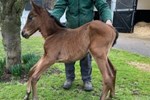
The project aims to investigate the contributions of gestational exposures and genetic variants to the risk of congenital developmental orthopaedic disorders (cDOD) in Thoroughbred foals.
The project will provide novel insights into the development, incidence and genetic basis of cDOD in Thoroughbred foals. The project outputs will inform evidence-based management modifications for Thoroughbred breeders to reduce the risk of cDOD in foals and improve broodmare fertility and welfare long-term.
-
Training Injury Prevention Study

The overarching aim of this project is to inform intervention strategies to reduce the risk of musculoskeletal injury in Thoroughbred racehorses in training.