New RVC study reveals that parasite-produced dopamine can alter host behaviour
A new study from the Royal Veterinary College (RVC) has shed light on how Toxoplasma gondii (T. gondii), the causative agent of toxoplasmosis, can alter host behaviour. The research findings show that such behavioural changes are achieved, at least in part, through dopamine manipulation caused by dopamine produced by the parasite itself.
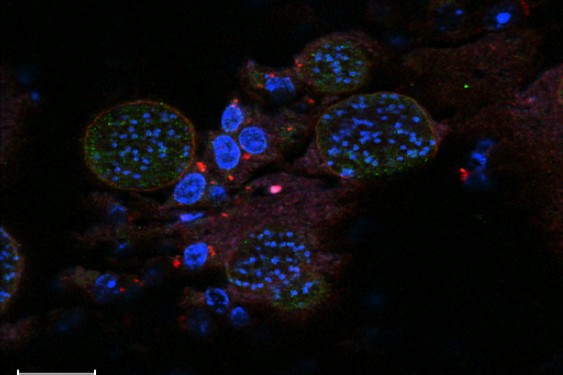
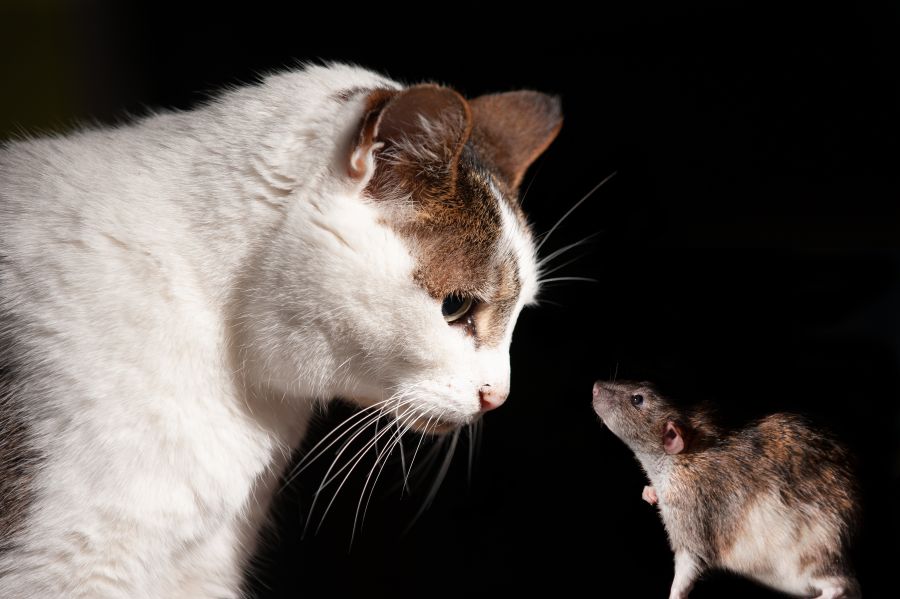
T. gondii is one of the most widespread parasitic infections in the world, capable of infecting all warm-blooded organisms, including humans. The parasite is known for its ability to subtly and specifically manipulate the behaviour of its host to maximise transmission to reach its only definitive host, cats. Altered behaviours include rodents being less fearful of, or even attracted to, cats. In addition, previous studies have indicated that some cases of human neuropsychiatric disorders, particularly schizophrenia, are associated with T. gondii infection. Therefore, this study sought to understand the mechanisms behind how the parasite manipulates host behaviour, to deepen knowledge of parasite-host interactions with significant implications and applications for human health.
For many years, scientists have suspected that disruption of neurotransmitters, particularly dopamine, may help explain how T. gondii modifies host behaviour. A previous study by these authors indicated that the parasite itself may be a source of this dopamine; the study found that the parasite genes contain instructions to produce tyrosine hydroxylase (TgTH). This protein is nearly identical to the one involved in dopamine production in mammals. However, whether TgTH actually impacted host behaviour remained controversial.
In this study, researchers from the RVC, Imperial College London and the University of Leeds, funded by the Stanley Medical Research Institute (SMRI) and the Medical Research Council (MRC), tested whether this parasite-encoded TgTH plays a direct role in these behavioural changes.
Using a biologically-appropriate model, scientists compared rats infected with wild-type T. gondii to those infected with genetically modified T. gondii strains engineered to express either moderate or high levels of TgTH, as well as T. gondii strains engineered without altering TgTH, as well as uninfected control lines. The researchers monitored behavioural changes using the Fatal Feline Attraction test, which measures how animals respond to cat urine. Automated tracking software was used to record movement, activity and zone preference, and differences between groups were assessed using Bayesian statistical modelling.
The study found that behavioural change increased in line with TgTH expression levels, with rats infected with higher overexpressing strains spending more time in the cat-scented zone and displaying characteristic shifts in activity patterns relative to those with lower over-expression or uninfected controls.
Additional key findings include that:
- All infected rats displayed measurable behavioural differences compared to uninfected controls, re-confirming the parasite’s ability to alter host responses to feline cues.
- Genetically engineered parasite lines caused milder effects than true wild-type strains, suggesting that genetic modification may subtly affect parasite fitness.
- Female rats were generally found to be more active and exploratory than males, regardless of infection status.
- Together, the results demonstrate that parasite-produced TgTH contributes to host behavioural changes.
The findings advance scientific understanding of how T. gondii influences its hosts and strengthen evidence that dopamine dysregulation plays a role in parasite-induced behavioural change. By demonstrating a direct, dose-dependent correlation between expression of TgTH and changes in host behaviour, the study provides an important foundation for future research into the neurological impacts of toxoplasmosis. The findings can also support broader studies into how infectious agents interact with the nervous system, including informing the study of human mental health conditions linked with chronic infection, particularly that of schizophrenia.
Professor Joanne Webster FMedSci FRS, Professor of Parasitic Diseases at the RVC and senior author of the study, said:
“Certain parasites can specifically manipulate host behaviour for their own benefit, but the mechanisms behind such changes remains largely unknown, particularly in vertebrate systems. Toxoplasma gondii, the agent of toxoplasmosis, is a canonical example, altering behaviour in rodents and other hosts, including humans. Dopamine dysregulation has been suspected as a mechanism, with our previous work revealing that parasite-encoded tyrosine hydroxylases (TgTH) may provide direct source of parasite-produced dopamine.
Here, using the biologically and clinically-appropriate rat model, with high-welfare non-invasive and specific behavioural assays, we demonstrate that TgTH, and hence dopamine dysregulation by the parasite itself, contributes to T. gondii-associated behavioural alterations, highlighting both theoretical significance and applied implications. Indeed, as the ability of parasites to alter host behaviour often captivates the curiosity of both the scientific and lay communities, even raising questions about longstanding philosophical issues such as the existence of free will, we very much hope that this study will be of broad general interest to all.”
Dr Fuller Torrey, Associate Director of the Stanley Medical Research Institute, said:
“This is important research in shedding light on Toxoplasma gondii as one of the possible causes of schizophrenia.”
Notes to Editors
References
Calvo-Urbano, B., Kaushik, M., Cheng, A-C., Bristow, G.C., Prandovsky, E.., Walker, M., Lamberton, P.H.L., McConkey, G.A. & Webster, J.P. (2025). The role of parasite-produced dopamine in Toxoplasma gondii-altered host behaviour. Nature Communications doi: 10.1038/s41467-025-66139-3
The full paper can be accessed at: https://www.doi.org/10.1038/s41467-025-66139-3
For media enquiries, please contact:
- rvc@plmr.co.uk
- Press Line: 0800 368 9520
About the RVC
- The Royal Veterinary College (RVC) is the UK's largest and longest established independent veterinary school and is a Member Institution of the University of London.
- It is one of the few veterinary schools in the world that hold accreditations from the RCVS in the UK (with associated recognition from the AVBC for Australasia, the VCI for Ireland and the SAVC for South Africa), the EAEVE in the EU, and AVMA in the USA and Canada.
- The RVC is ranked as the top veterinary school in the world in the QS World University Rankings by subject, 2025.
- The RVC offers undergraduate and postgraduate programmes in veterinary medicine, veterinary nursing and biological sciences.
- The RVC is a research-led institution, with 88% of its research rated as internationally excellent or world class in the Research Excellence Framework 2021.
- The RVC provides animal owners and the veterinary profession with access to expert veterinary care and advice through its teaching hospitals and first opinion practices in London and Hertfordshire.
