
Pairing and sharing in V formation flight
New publication reveals how birds can't 'cheat' in V formation flight by spending all their time at the back.
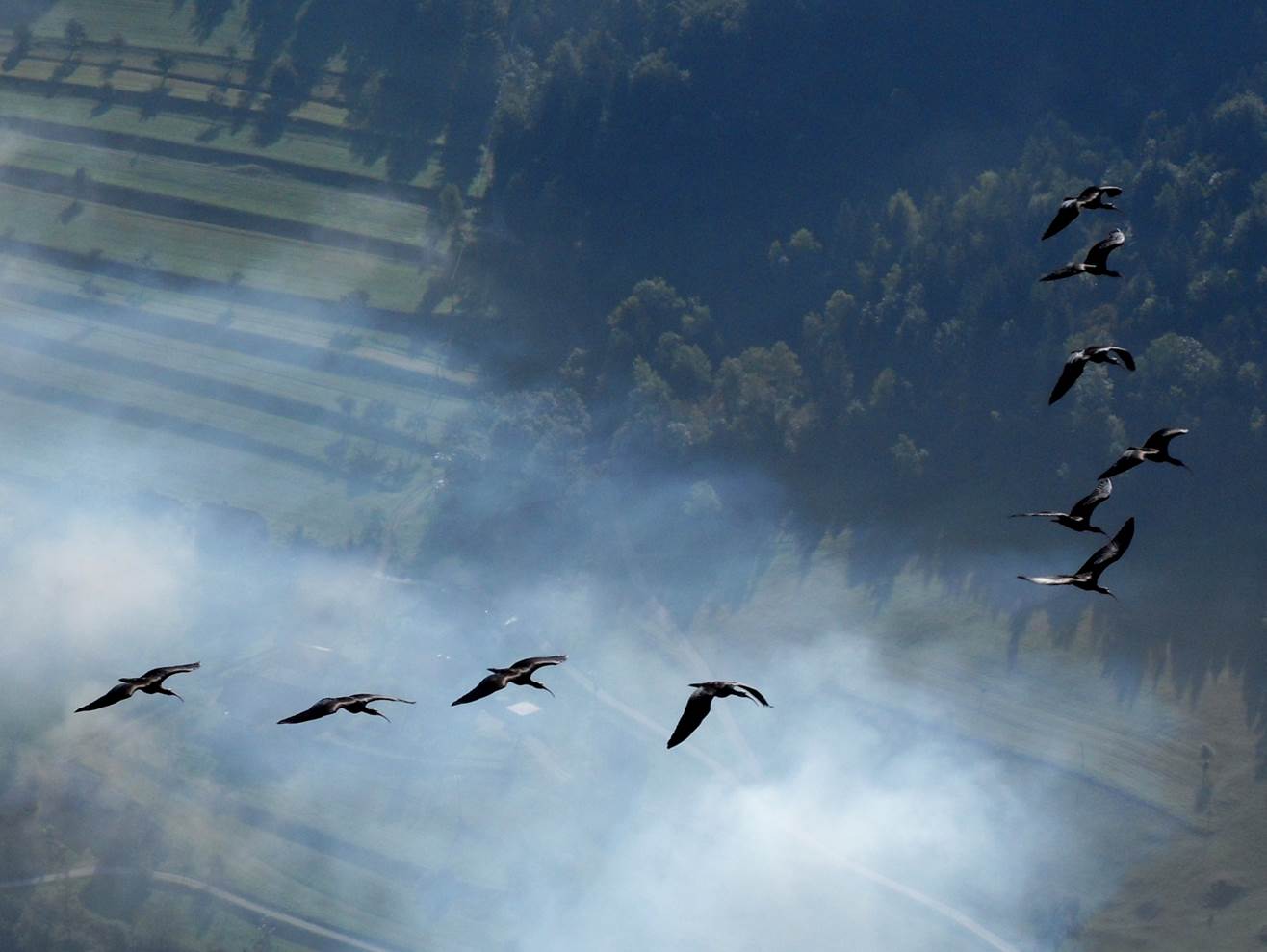
Research published in Nature last year by the RVC Structure and Motion Lab showed that when birds are flying in a V formation, energy savings can be achieved by using the aerodynamic up-wash produced by the preceding bird. This means that the leading bird in a formation uses the most energy to fly.
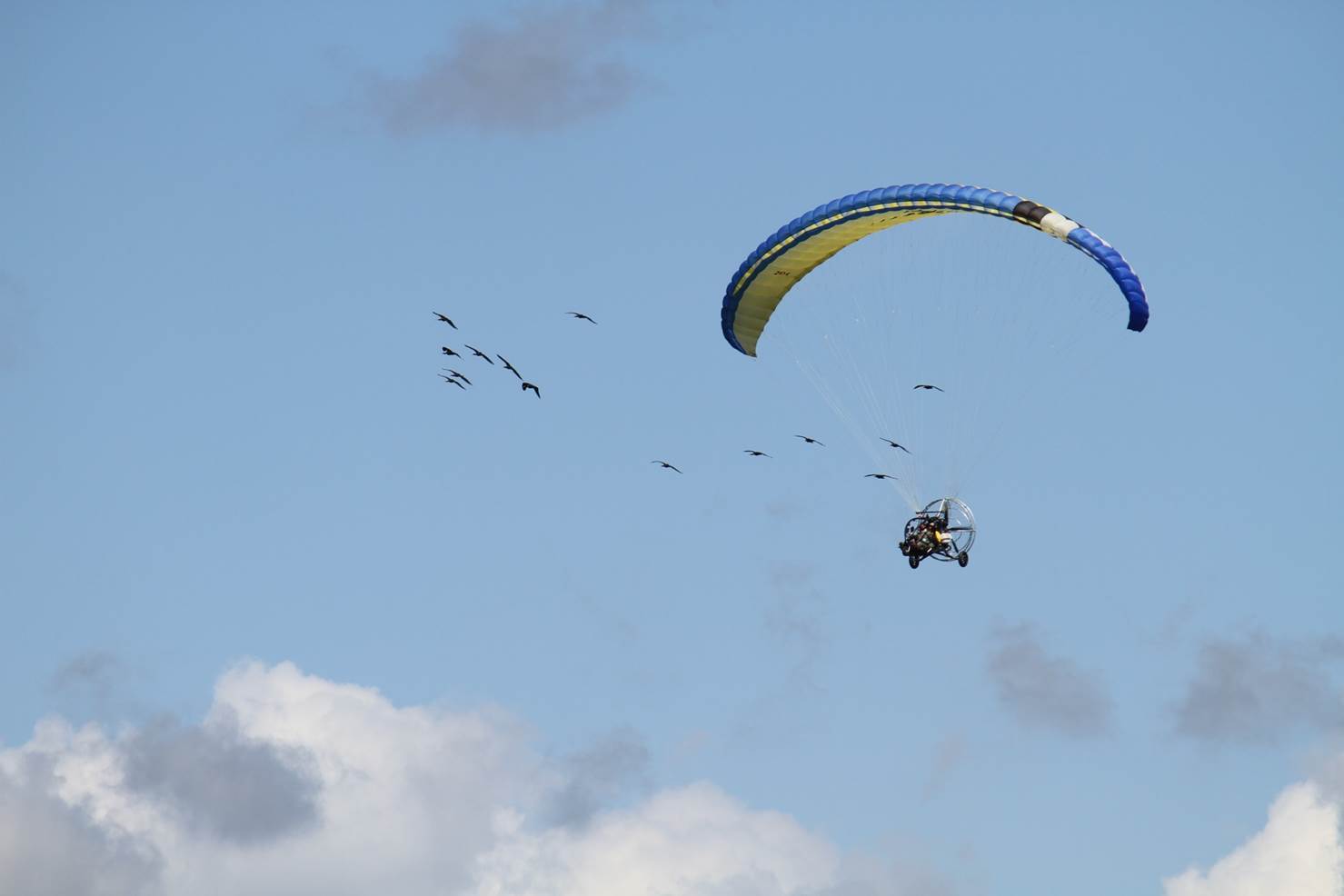
New research, published in the journal PNAS, begins to explain why, if it is so much easier to fly at the back of a V, birds change their position rather than trying to stay at the back. For the study, the RVC team developed miniature GPS and motion sensing loggers that could be carried by a flock of juvenile northern bald ibis (Geronticus eremita) during human-led migration flight. The data showed that pairs of birds take turns, matching the time spent leading and in the wake position and sharing the benefit. This pairing-and-swapping behaviour is likely to prevent 'cheating' by individuals. The research also found evidence that taking turns in leading has a substantial influence on the size and cohesion of the flight formations.
This research was undertaken in collaboration with the Waldrapp conservation team and the University of Oxford.
Reference: Voelkl, B, Portugal SJ, Unsold, M, Usherwood, JR, Wilson, A and Fritz, J (2015) Matching times of leading and following suggest cooperation through direct reciprocity during V-formation flight in ibis. PNAS published ahead of print February 2, 2015, doi:10.1073/pnas.1413589112
The full article can be read in PNAS.
You may also be interested in:
-
New study from the RVC reveals that dinosaurs may have used their tails to power jumps

New research from the Royal Veterinary College (RVC) has revealed that when dinosaurs leapt into …