RVC launches a hearing clinic for cats and dogs
The RVC’s Neurology and Neurosurgery Service has established an outpatient hearing clinic. Referrals to the clinic can be made by the client’s regular vets.
The clinic is located at the RVC’s Queen Mother Hospital for Animals (QMHA), which is on the Hawkshead Campus near Potters Bar in Hertfordshire. The clinic is delivered by a board-certified neurologist, supported by the RVC’s expert neurology nurses.
Deafness in dogs and cats can be congenital (present from birth) and there are more than 90 breeds in which congenital deafness has been documented. These include Dalmatians, Australian cattle dogs, Border collies and English setters. Identifying deaf puppies and kittens allows appropriate care plans to be made for the individual, and owners/breeders can avoid breeding affected individuals and so work to reduce the incidence of deafness in future litters.
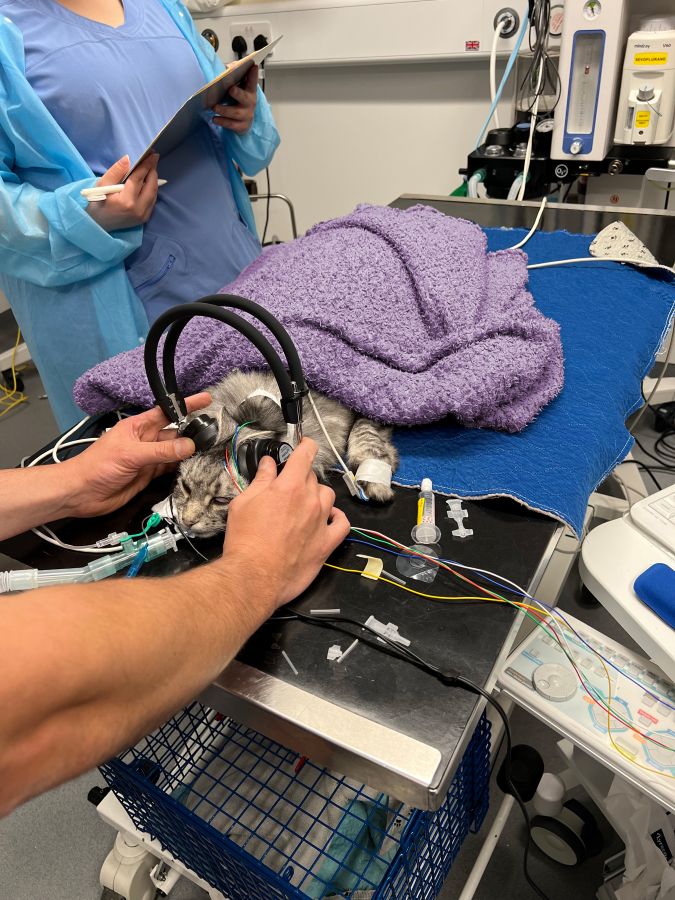
The RVC clinic offers hearing tests for litters of puppies and kittens, as well hearing tests for adult dogs and cats where there is a concern for deafness and/or other ear disease. The team uses a brainstem auditory evoked response (BAER) electrodiagnostic tool to assess hearing.
The process and ramifications
Click sounds are played through headphones held over the animal’s ears and five small needle electrodes, inserted at specific locations under the skin on the head, detect any subsequent electrical signals as the sound information is carried along the hearing pathways. The electrical signals are displayed as waveforms on a computer screen, allowing the neurologists to analyse their size and shape and so determine the function of the inner ear and associated auditory pathways.
If a loud click results in a flat line on the screen this indicates that the patient is deaf in the tested ear. If waveforms do appear then progressively quieter noises are played to determine the level of hearing present in the tested ear. A partial hearing deficit could be the result of a condition such as an inner ear infection, inflammation or tumour.
With the support of the Neurology and Neurosurgery team, other RVC specialist services are now utilising BAER testing for their patients. The Soft Tissue Surgery Service is using BAER to evaluate patients undergoing ear surgery. The technology is also being used by the RVC’s Critical Care team to investigate brainstem function in critically ill patients.
The BAER equipment was acquired through donations to the RVC’s charity the Animal Care Trust.
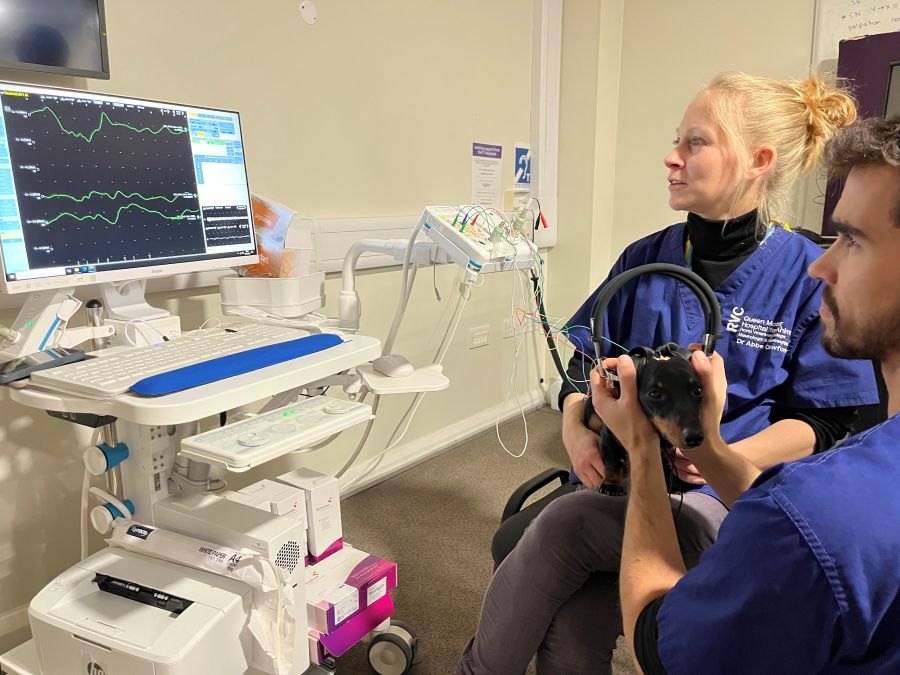
Commenting on the new hearing clinic, Dr Abbe Crawford, Lecturer in Neurology and Neurosurgery, said: “We are excited to be offering a hearing clinic at the QMHA, which will encompass deafness screening for puppies as well as deafness investigations in adult dogs. By screening puppies for deafness, we can support their early care whilst also, importantly, helping breeders to reduce the incidence of congenital deafness in breeds known to be at risk. For adult dogs, in which there is a cause for hearing compromise, we can confirm the presence and severity of that compromise, before then undertaking thorough investigations to try to identify the underlying cause.”
Dr Crawford added: “The hearing clinic also offers exciting learning opportunities for our undergraduate and postgraduate students. They will gain exposure to this rapid, non-invasive, patient-side testing, as well as clinical insights to support their understanding of the auditory system and the diseases that can affect it.”
Read more about the clinic: https://rvc.uk.com/hearing-test-clinic
You may also be interested in:
-
Pioneering research from the RVC reveals early imaging biomarkers of osteoarthritis in dogs

Novel research from the Royal Veterinary College (RVC) has identified new markers to look for in …