
Emergency contact: 01707 666399
Feline Hearing Tests
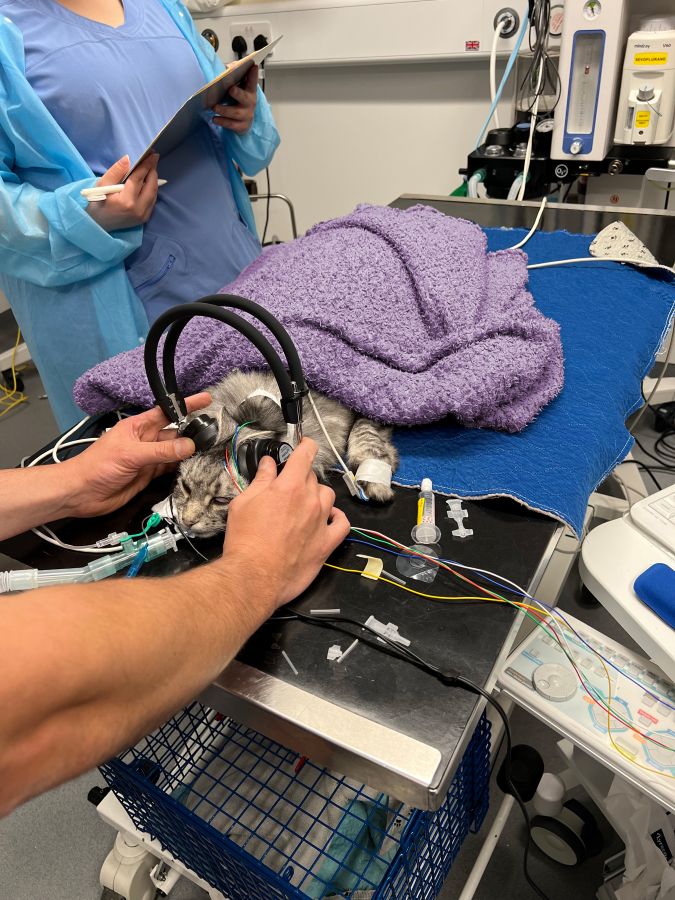
Screening kittens for deafness is important so we can support their early care and development. It also provides breeders with valuable information to help then reduce the incidence of congenital deafness in high-risk breeds. For adult cats, we can confirm the presence and severity of hearing issues before undertaking any necessary investigations into underlying causes.
Who can book appointments for the animal hearing clinic?
Breeder Appointment Requests
Breeders wishing to have litters checked can make booking requests by sending an email to qmhreception@rvc.ac.uk. Please use “Hearing Clinic – Litter Appointment Request” in the email subject line
Vet Professionals: need to refer a patient?
Cat and Kitten Hearing Test Prices
(Last price update January 2026)
- Cat litter hearing tests: £50 per kitten where a litter is brought in for routine hearing tests.
- Individual cat: £155 (+ routine neurology consultation charge).
Fact Sheet - Deafness in Cats
Common Causes of Feline Congenital Deafness:
Congenital deafness in cats is linked to the KIT gene (White Spotting / Dominant White gene).
Which cat breeds are more susceptible to congenital deafness?
- Main Coons
- Norwegian Forest Cats
- Foreign White
- White Cornish Rex
- White Devon Rex
- White Scottish Fold
- White American Wirehair/Shorthair
- White Persians.
Other common causes of hearing loss in cats
- Chronic Ear Infections (Otitis Externa/Media/Interna)
- Drug toxicity (such as aminoglycoside antibiotics, topical chlorhexidine solutions )
- Ageing (Presbycusis
- Inflammatory Polyps/Tumours: These obstruct the external ear canal and can cause conduction deafness. Tumours can also invade the inner ear and destroy the hair cells (the receptor cells for hearing).
- Trauma: Physical damage to the eardrum or a severe head injury can compromise hearing.