
Veterinary Epidemiology
What is the MSc in Veterinary Epidemiology?
In a world where global transport links allow rapid movement of people and animals, disease can spread more quickly than before and is harder to control than ever. In such a world there is a growing need for trained epidemiologists at the front line of disease surveillance.

The UK leads the way in providing this training and, in order to meet the demand for skilled professionals, the RVC has developed a unique postgraduate veterinary epidemiology course, delivered jointly with the London School of Hygiene and Tropical Medicine (LSHTM).
This demanding masters in veterinary epidemiology programme is led by veterinary epidemiologists and supported by policy makers from the forefront of UK government and you will gain a fascinating insight into the work of the Department for Environment, Food, and Rural Affairs (Defra) and the Animal and Plant Health Agency (APHA, formerly AHVLA). Your areas of study will combine LSHTM’s strengths in epidemiological principles and communicable disease epidemiology, with the RVC’s expertise in veterinary epidemiology, animal health and production.
Why study at the RVC?
Founded in 1791, the Royal Veterinary College, University of London, is a long-established institution with a global reputation for veterinary and biological sciences. Our mission is to provide visionary leadership and excellence in veterinary science through innovative scholarship and pioneering clinical activity. We are the only veterinary school in the world to be accredited by the American Veterinary Medical Association, the European Association of Establishments for Veterinary Education, the Royal College of Veterinary Surgeons and the Australasian Veterinary Boards Council.
The LSHTM
The LSHTM is a world-leading centre for research and postgraduate education in public health and global health, and was recently named the world’s leading research-focused graduate school (Thomson Reuters / Times Higher Education, 2013). It has been cited as one of the world’s top universities for collaborative research.
The LSHTM's mission is to improve public health and health equity in the UK and worldwide, working in partnership to achieve excellence in public and global health research, education and translation of knowledge into policy and practice.
What will I learn?
Upon successful completion of the course you will be able to:
- Demonstrate and understand the key concepts underpinning the discipline of veterinary and medical epidemiology
- Select an appropriate study design when confronted with an epidemiological research question and develop a detailed study protocol capable of answering the research question
- Analyse and interpret epidemiological data derived from cross-sectional, case-control and cohort studies
- Review critically the published epidemiological literature
- Apply epidemiological principles to surveillance, and infection and disease control, within animal and human populations
- Communicate effectively with researchers from different disciplinary backgrounds
- Communicate effectively with other people with an interest in human and animal health, including the general public and key policy makers.
Programme delivery
The MSc may be completed full-time in one year or part time over two years, and consists of nine taught modules and a research project. The course starts in September each year and you will split your time between the RVC and LSHTM. Students then undertake a four-month research project on a topic of their choice.
The teaching is delivered using the excellent facilities of the LSHTM in London as well as at the RVC’s London and Hertfordshire campuses. The course also includes a visit to the APHA (Weybridge).
The field of Veterinary Epidemiology straddles several different areas. Therefore, although you will be based at the RVC, aspects of basic epidemiology applicable to both human and animal diseases are taught at the LSHTM, and risk analysis and surveillance are taught by APHA staff.
Full time
Term 1
There is a two-week orientation period that includes an introduction to studying at the Royal Veterinary College and London School of Hygiene and Tropical Medicine, followed by four compulsory modules:
- Extended Epidemiology (LSHTM)
- Principles of Epidemiology and Surveillance (RVC)
- Research Skills and Epidemiological Aspects of Laboratory Investigations (RVC)
- Statistics for Epidemiology & Public Health (LSHTM)
Terms 2 and 3
All students take four compulsory modules:
- Applied Veterinary Epidemiology (RVC)
- Epidemiology of Infectious Diseases (LSHTM)
- Modelling and Dynamics of Infectious Diseases (LSHTM)
- Statistical Methods in Epidemiology (LSHTM)
In addition, students choose a fifth module from the following:
- Economics of One Health (RVC)
- Spatial Analysis in Epidemiology (RVC)
Research project
Students on this course complete taught modules and assessments by June, after which the veterinary epidemiology MSc students will work on a research project from June to August, culminating in an oral examination in September.
Please see an example of a previous student project by Mattio Begovoeva: which was presented at the SVEPM Conference and published in Preventative Veterinary Medicine: Factors associated with foot-and-mouth disease seroprevalance in small ruminants and and identification of hot-spot areas in northern Nigeria
Part-time
Part time students follow the below study plan. However we recognise the need for flexibility, and are happy to tailor your part-time study to meet your specific requirements (subject to agreement with the course director).
First year
- Term 1: Extended Epi (LSHTM) ans Statistics for Epi and Public Health (LSHTM)
- Term 2 Statistical methods in epi (LSHTM) and Epi of Infectious Diseases (LSHTM)
Second year
- Term 1 Principles of epi and surveillance (RVC) and Research skills and epi aspects of lab investigations (RVC)
- Term 2 Modelling of infectious diseases (LSHTM) Economics of One Health OR Spatial Analysis in Epidemiology (both RVC)
- Term 3 – Applied Vet Epi (RVC) and research project
Sign up to our mailing list to hear about future opportunities
 Veterinary Nursing at the RVC
Find out more about what veterinary nursing at the RVC can offer you, your career and your team. Veterinary Nursing at the RVC
 Sign up to hear more from RVC
If you’re interested in studying this course, and would like to stay informed, sign up to our RVC For Me mailing list to receive relevant information about upcoming events, students stories and life at the Royal Veterinary College.
Academic requirements
If you are working in the state veterinary service and/or are interested in veterinary epidemiology, then our Masters programme will be highly relevant to you.
You must have (or expect to receive) a first- or second-class university honours degree (or equivalent). Please contact Admissions if you are unsure whether your degree is equivalent. As this is a multidisciplinary subject, we welcome candidates from many different backgrounds. If you have a degree in veterinary science, biological science, veterinary or human medicine, mathematics or statistics, or have relevant postgraduate experience, then we encourage you to apply.
English language requirements
A good working knowledge of scientific English is essential in order to follow the course. All applicants must have an acceptable English Language qualification:
- IELTS (Academic) score of 7.0 or above with minimum 6.5 in each component
For those without IELTS, please see our English Language Requirements page for a full list of qualifications we will accept as alternatives.
Maths requirements
The course has highly quantitative components and, although there are opportunities to brush up on basic computer and mathematics knowledge at the start of the course, you will be expected to have basic numerical skills.
Please do have a look at the sites below to help you decide whether this course is for you.
Click here for a package of materials developed by LSHTM staff to help you refresh your basic maths skills prior to progressing with your application. The materials include an online interactive self-assessment exercise (in which you are provided with immediate feedback and solutions), PowerPoint slides and a Word document of notes, exercises and solutions.
You may also find the links below of use:
Math Tutor - UK-based site with video tutorials on more than 80 topics, including diagnostics, summary text and exercises (with those on arithmetic and algebra of most relevance for the majority of LSHTM MSc students)
The Math Forum@Drexel University - a good source to find online links to a number of topics
Maths Online
S-Cool A Level - includes a useful statistics section under The Basics
S-Cool GCSE - useful for indices, percentages, approximations, graphs, representing data, probability & calculators
BBC Maths GCSE Bitesize - useful for basic algebra and number (rounding & fractions)
BBC Maths Key Stage 3 Bitesize - useful for formulae and rounding off.
What will I be able to do with my qualification?
Demand for trained veterinary epidemiologists currently outstrips supply, and there are excellent opportunities in a variety of organisations involved in disease control at national, regional and international level, as well as in teaching, research and various food-related industries.
RVC graduates hold senior positions within government departments in many different countries. Many go on to work alongside the people who have taught them during the previous year. Within the UK, graduates are employed by the Department for Environment, Food and Rural Affairs (Defra) and the Animal and Plant Health Agency (APHA, formerly AHVLA), as well as in research centres and pharmaceutical companies.
Alumni Inspiration
Luisa Dorma, MSc Veterinary Epidemiology graduate, 2014
[I am] enjoying working at APHA. I have realised just how much I learnt during the MSc [Vet Epi] now that I am putting it into practice!
What are you doing now? I am currently working as an epidemiologist at the Animal and Plant Health Agency. The main purpose of my job is to provide support for epidemiological surveillance and research projects undertaken by the Department of Epidemiological Sciences, through data management and descriptive statistical analysis as well as contributing to the management and implementation of these studies. The work I do is very varied and involves working on a range of species, diseases and farming systems.
What aspect of the PGT course prepared you best for your career? The course content has been really relevant to my career and I have developed a range of skills and a good understanding of epidemiological principles. I have found that as a result of the course, my thought processes are more in-depth and methodical and I am able to find novel solutions to complex challenges
What did you think of the teaching staff on the course? The teaching staff were all very open, honest and friendly. They prepared us for how tough the course was going to be and were there ready to provide help and support as needed. Many of the staff are experts in their field and having the opportunity to listen to their experiences was really useful.
What did you think of the learning and research facilities at the RVC? The facilities at the RVC are great, with access to everything that you need. The collaboration with the LSHTM is very useful and provides increased access to world-class facilities.
Has the PGT course at the RVC enabled your career goals as you had hoped? The MSc has provided me with all of the skills required to be a successful epidemiologist and also given me a lot of confidence in my own abilities. My experiences from talking to potential employers have only been positive, with most recognising the value of the course and the skill set that graduates have. Prior to starting the course I hoped to one day be working as an epidemiologist for the APHA, whom I began to work for 3 days after completing it!
Anna Borlase, MSc Veterinary Epidemiology graduate, 2016
2015/16 MSc Vet Epi graduate, Anna Borlase, is doing a PhD with the RVC and LSHTM on a Bloomsbury studentship.
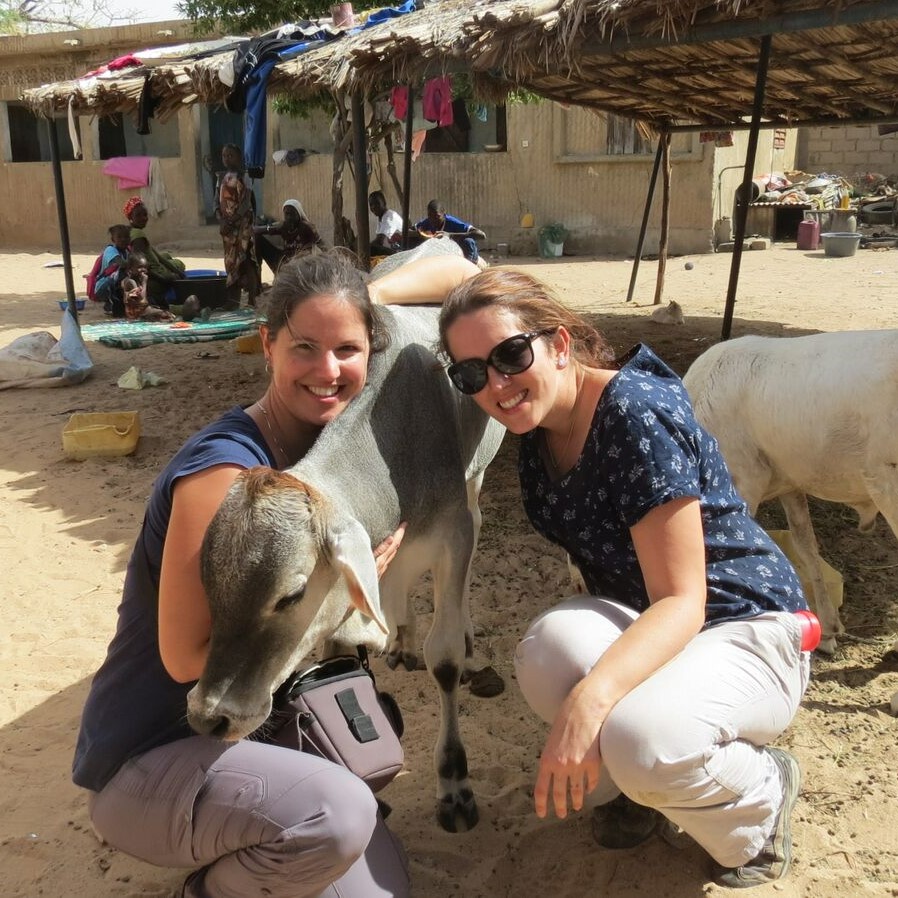
I’m doing a PhD...on modelling transmission dynamics of zoonotic schistosomiasis in Senegal. Just got back from first field work in Senegal last week, and it was definitely an experience!
The MSc and especially the modelling module at LSHTM are going to prove absolutely crucial for me. Without the training last year I a) would never have been offered the PhD(!), and b) wouldn’t have a clue where to start!'
Further afield, graduates from this programme work for the United Nations’ Food and Agriculture Organisation and the International Livestock Research Centre in Nairobi. Others hold positions in government departments in New Zealand, Thailand, Vietnam, Singapore, Spain, Bangladesh, Pakistan, Ethiopia, Zambia, Croatia, Slovenia, Ireland, Switzerland, Pakistan, Iceland, Norway and France.
Former students have also enrolled on PhDs at leading universities worldwide, including Bristol, UK, the RVC Veterinary Epidemiology, Economics and Public Health (VEEPH) Group, Cornell University, USA, and Massey University, New Zealand.
Key academic staff - RVC
- Dr Kim Stevens
Associate Professor in Spatial Epidemiology,
Course Director for MSc Veterinary Epidemiology
- Dr Julian Drewe
Associate Professor of Veterinary Epidemiology
- Professor David Brodbelt
Professor of Evidence-based Veterinary Medicine
- Professor Javier Guitian
Professor of Veterinary Public Health
- Professor Barbara Haesler
Professor in Agrihealth
- Dr Jackie Cardwell
Associate Professor in Epidemiology
- Dr Pablo Alarcon
Senior Lecturer in Animal Health Economics
Key academic staff - LSHTM
- Mr Sujit Rathod
Associate Professor, London School of Hygiene & Tropical Medicine, Population Health
Programme Director for MSc Veterinary Epidemiology - Dr Kaja Abas
Associate Professor, Infectious Disease Epidemiology & Dynamics - Professor Katherine Fielding
Professor, Infectious Disease Epidemiology & International Health - Dr Lara Gosce
Assistant Professor, Infectious Disease Epidemiology & Dynamics - Dr Stephane Hue
Associate Professor, Infectious Disease Epidemiology & Dynamics - Dr Palwasha Khan
Clinical Associate Professor, Clinical Research - Prof Adam Kucharski
Professor of Infectious Disease Epidemiology, Infectious Disease Epidemiology & Dynamics
- Professor David Leon
Professor of Epidemiology Non-Communicable Disease Epidemiology
- Dr Suping Ling
Assistant Professor, Epidemiology Health Services Research & Policy - Dr David MacLeod
Associate Professor in Infectious Disease Epidemiology & International Health - Dr Ananya Malhotra
Research Fellow, Health Services Research & Policy
- Dr Melissa Matz
Assistant Professor, Non-Communicable Disease Epidemiology
- Dr Eric Ohuma
Associate Professor, Infectious Disease Epidemiology & International Health
- Dr Charles Opondo
Associate Professor, Medical Statistics
- Dr Julia Pescarini
Assistant Professor, Infectious Disease Epidemiology & International Health - Dr Sophie Sarrassat
Assistant Professor, Infectious Disease Epidemiology & International Health
- Dr Anna Schultze
Assistant Professor, Non-Communicable Disease Epidemiology
- Dr Emilia Vynnycky
Associate Professor, Infectious Disease Epidemiology & Dynamics
- Professor Richard White
Professor of Infectious Disease Modelling, Infectious Disease Epidemiology & Dynamics
Below are abstracts showcasing some of the research projects recently completed by students on the MSc Veterinary Epidemiology course.
Investigating the occurrence of extended-spectrum β-lactamase (ESβL)-producing Escherichia coli on a UK dairy farm and the associated risk factors
Candidate: Philippa Campbell Supervisor: Dr Lucy Brunton
Antimicrobial resistance (AMR) poses a significant threat in the UK and globally. Extended-spectrum β-lactamases (ESβL) confer resistance to most penicillin, cephalosporins such as oxyimino-β-lactam compounds in E. coli (Paterson and Bonomo, 2005b). Three ESβL genes: blaCTX-M, blaSHV, and blaTEM are significant in both human and veterinary medicine. This study investigates the occurrence of ESβL E. coli on a UK teaching farm. The objectives are (1) to isolate ESBL E. coli present in soil and faecal samples, (2) perform antimicrobial susceptibility testing for 8 antibiotics by disc diffusion on the samples, (3) perform a singleplex PCR for ESβL E.coli (blaCTX-M, blaSHV, blaTEM genes), and (4) conduct a univariable and multivariable logistic regression analysis to explore risk factors associated with the occurrence of ESβL E. coli in the samples. A total of 39 livestock and environmental samples were collected from the teaching farm in Hertfordshire, UK, including 22 from Friesian cows, 4 from chickens, and 10 from fields on the farm. Eight antibiotics were selected based on antibiotic usage on the farm and their relevance as described in the UK AMR VARSS reports. Antimicrobial Sensitivity Testing (AST) was performed for Cefalexin, Cefoxitin, Cefotaxime, Cefotaxime/Clavulanic acid, Ceftazidime, Ceftazidime/Clavulanic acid, ampicillin and amoxicillin/Clavulanic acid. A singleplex PCR was carried out for blaCTX-M, blaSHV, and blaTEM, and the housekeeping gene 16S was used to detect E. coli in the isolates. A univariable logistic regression was used to investigate the associated risk factors of ESβL-E. coli on a teaching farm. Of the Isolates positive for E. coli on selective MacConkey agar 100% (38 /38) were positive for Enterobacteriaceae ribosomal 16S rRNA. While 57.9% (22/38) were positive for blaSHV, 47.4% (18/38) and 2.6% (1/38) were positive for blaCTX-M and blaTEM, respectively. The prevalence of these genes varied across the different locations on the farm. The isolates from cows aged over 2 years old were more likely to carry blaCTX-M (OR 11.00; 95% CI: 1.42-85.20; p=0.022). In conclusion, to understand ESβL-producing E. coli circulating on UK dairy farms further, AMR surveillance is recommended. A multiplex PCR for rapid screening would be more time-efficient in reporting results compared to the method used in this study.
Epidemiology and clinical management of suspected theobromine ingestion in dogs under primary veterinary care in the UK in 2023
Candidate: Rebecca Edwards Supervisor: Professor Dan O’Neil
Suspected theobromine ingestion is a recognised concern in primary veterinary care, posing a toxic risk to dogs and a worry for owners. This study aimed to quantify the 2023 annual incidence of suspected theobromine ingestion among UK dogs under primary care, assess demographic risk factors, and describe the clinical presentation and management. Based on a theory of closer owner-dog attachment, the study hypothesised that brachycephalic dogs have higher odds of suspected theobromine ingestion than non-brachycephalic dogs under primary veterinary care. A retrospective cohort design estimated the annual incidence risk of seeking primary veterinary care for suspected theobromine ingestion using anonymised primary-care electronic health record (EHR) data from the VetCompass. Demographic risk factors were assessed via a nested case-control study, with liberal univariable logistic regression selection (p<0.2) informing forward stepwise multivariable modelling. A further breed-derived multivariable model was developed to replace the breed variable to explore breed-derived risk factors. Descriptive analysis was used to summarise the frequency of clinical presentation and management of confirmed cases. Of 2,283,866 UK dogs under primary care in 2023, 10,332 (0.45%) candidate cases of suspected of theobromine ingestion were identified; 2,781 (26.9%) were manually randomly sampled, yielding 2,000 confirmed cases. The overall estimated 1-year incidence risk for suspected theobromine ingestion was 0.33% (95% CI: 0.31–0.34). In the final multivariable analysis, Beagles had the highest adjusted odds of suspected theobromine ingestion than crossbred dogs (aOR 2.46, 95% CI 1.82–3.33). Among dogs aged <3, male neutered dogs had the highest odds compared to entire females (aOR=1.73; 95% CI 1.41–2.11; p<0.001). In sex-neuter and age interaction, only female neutered dogs aged 9–<12 had increased odds (interaction aOR=1.15, 95% CI 0.67–1.98, p=0.616). Of the 2,000 confirmed cases, 469 (23.45%) had at least one clinical sign. Vomiting (n=281, 59.91%) and diarrhoea (n=139, 29.64%) were the most reported clinical signs. Clinical treatment was administered in 1,412 (70.60%) cases. Emesis induction (n=1,076, 76.20%) was the predominant intervention, with prophylactic decontamination (n=1,046, 74.08%) performed more frequently than symptomatic decontamination (n=158, 11.19%). The overall event-level fatality rate was 0.20% (95% CI 0.06–0.51). Suspected theobromine ingestion is a relatively common presentation for dogs under UK primary veterinary care, but fatality appears rare. The hypothesis that brachycephalic status was associated with increased odds of suspected theobromine ingestion was not supported. Findings support the enhancement of owner awareness and breed-specific vigilance in hound-type dogs, such as Beagles.
Modelling habitat suitability for Culicoides midges, a vector for Lumpy Skin Disease Virus in India, using multicriteria decision analysis
Candidate: Adam Jacobsen Supervisor: Dr Kim Stevens
Lumpy skin disease virus (LSDV) is a vector borne disease affecting bovids, which can have huge economic impacts due to mortality, reduced milk production, and decreased cattle fertility. The disease is spread mechanically by several vectors; one of which is the genus of midge called Culicoides. The disease has been in India since 2019 and data on its distribution is limited. This study aimed to map the habitat suitability of Culicoides in India to identify (i) potential high-risk areas and (ii) the bovid population that is at risk in India. Literature regarding the factors which dictate habitat suitability for Culicoides was compiled. Six factors were identified: Temperature (Average Annual Maximum & Average Annual Minimum), Annual Precipitation, Relative Humidity, Soil PH, and Wind Speed. Each of these variables were mapped, standardized using fuzzy membership functions, assigned a weighting using analytical hierarchy process (AHP), and then used in a multi criteria decision analysis model (MCDA) to create a habitat suitability map for Culicoides with a scale of zero to one. The largest areas of suitability occurred in the east of the country with narrower areas to the north and west. It’s notable that the areas surrounding Bangladesh are completely suitable, and that the pattern of suitability seems to follow the Normalised Difference Vegetation Index (NDVI) of India. The only areas of the country deemed completely unsuitable is the very north of the country, however the existence of certain species there shows that some species have likely developed to endure harsher conditions. The Population at Risk (PAR) calculations showed that over 100 million bovids are at high risk of LSDV transmission by Culicoides in India. This study shows that sampling of these high-suitability areas may be wise to better understand the role Culicoides play as a vector of LSDV in India.
Spatial risk mapping of Lumpy Skin Disease vectors (Stomoxys spp.) in India using multi-criteria decision analysis
Candidate: Nikhil Singh Supervisor: Dr Kim Stevens
Lumpy skin disease (LSD) spreads chiefly via mechanical vectors; among them, Stomoxys spp. are considered the most efficient. Currently, India lacks fine-scale vector-focused risk layers to guide seasonal control. This study developed monthly as well as annual, 1-km habitat-suitability maps for Stomoxys across India using a spatial multi-criteria decision analysis (MCDA) framework and quantified bovine population at risk (PAR) by intersecting suitability with bovine densities. Six predictors (temperature, precipitation, relative humidity, bovine density, rural/peri-urban human density, and horse density) were standardised to 0–1 with literature based fuzzy membership functions and combined using Analytic Hierarchy Process weights (consistency ratio < 0.10). Monthly suitability surfaces (January–December) and an annual composite were generated; robustness was assessed via two sensitivity runs (equal weights; all-linear memberships). PAR was estimated under thresholds ≥0.5 – ≥0.9. Suitability rose with the pre-monsoon, peaked during the monsoon (September), and declined post-monsoon, persisting in the northeast and along parts of the southern coast in winter and reaches to minimum in summer; the annual hotspot banded through the Indo-Gangetic plain and eastern states. At ≥0.5, bovine PAR was lowest in May (87.4 M; 22.5 %), increasing in June (237.3 M; 61.2 %) and peaking in September (374.2 M; 96.4 %); tightening the threshold at the September peak yielded 353.0 M (≥0.6), 295.7 M (≥0.7), 166.2 M (≥0.8) and 8.4 M (≥0.9). Equalising weights changed mean suitability by ~0.00–0.06 across months, whereas linear memberships reduced means by ~0.05–0.16, indicating low sensitivity to moderate weighting choices but high sensitivity to membership specification. These outputs convert ecophysiological suitability into an actionable exposure surface, highlighting when and where risk concentrates to prioritise vector management and vaccination. The framework is readily updateable and provides a defensible basis for risk-based planning; future work should validate against entomological field data and incorporate additional vector taxa.
Molecular Epidemiology of Multidrug-Resistant Escherichia coli on a UK mixed-species dairy Farm: Prevalence, Risk Factors, and Environmental Links
Candidate: Yatong Gao Supervisor: Dr Lucy Brunton
Multidrug resistance (MDR), known as the antimicrobial resistance (AMR) to three or more antimicrobial classes, is a growing One Health concern, with livestock and their environments acting as major reservoirs. Escherichia coli is widely used as an indicator to track AMR trends across the One Health system. However, most AMR and MDR research targets large commercial farms or higher production levels, with limited studies on small- to mid-scale and mix-species farm that is common in worldwide. This crosssectional molecular epidemiology study assessed the prevalence and potential risk factors for MDR and AMR E. coli in faecal and environmental samples from a UK small- to midscale mixed dairy farm under regular veterinary care. Antimicrobial susceptibility testing (AST) and multiplex PCR were used to determine AMR phenotypes and genotypes, and logistic regression explored associations between the resistance outcomes and sample type, source and location. Among 38 confirmed E. coli isolates, 23.7% were MDR. Streptomycin (71.1%) and amoxicillin/clavulanic acid (60.5%) had the highest AMR prevalence, while blaSHV (57.9%) was the most common resistance gene. Also, we found that higher AMR was generally linked to prolonged antibiotic use. Isolates from chickens tend to have the highest odds of MDR (OR=10, 95% CI: 0.58–171.20, p = 0.112) and other resistances compared to milking cows, followed by isolates from grazing fields, calves and dry cows, although no associations reached statistical significance due to small sample size and collinearity. This study explores AMR status in a regulated mixed-species dairy farm and the role of management in limiting bacterial resistance, suggesting the potential value of sustained farm-level surveillance on small- to mid-scale farms.
Tuition Fees
The tuition fees for students commencing the course in 2026/27 are as follows:
|
Home Tuition Fees including Island Fees (Channel Islands & Isle of Man) | International Fees |
|---|---|
| £15,495 |
£33,010 |
For part-time fees please see this link https://www.rvc.ac.uk/study/fees-and-funding/fees#panel-tuition-fees-for-postgraduate-taught-and-research-students
Tuition fee amounts are subject to increase each academic year, please be aware of this when making your calculations and planning how much money you will require.
- Students from countries outside the UK who wish to undertake full-time study at the RVC are required to pay the international fee for their programme of study (please see Fee status section).
- Information on Fees & Funding can be found here
The following course-related costs are included in the fees:
- Access to books and journals essential to your course (print and digital)
- Open access and bookable IT equipment such as PCs and laptops
- Largely paperless curriculum plus £10 p.a. printing allowance
- Annual membership of College gym (both campuses)
Accommodation and living costs are not included in the fees. Our Housing Advice pages provide further information on College and private housing.